

 Blog
Blog
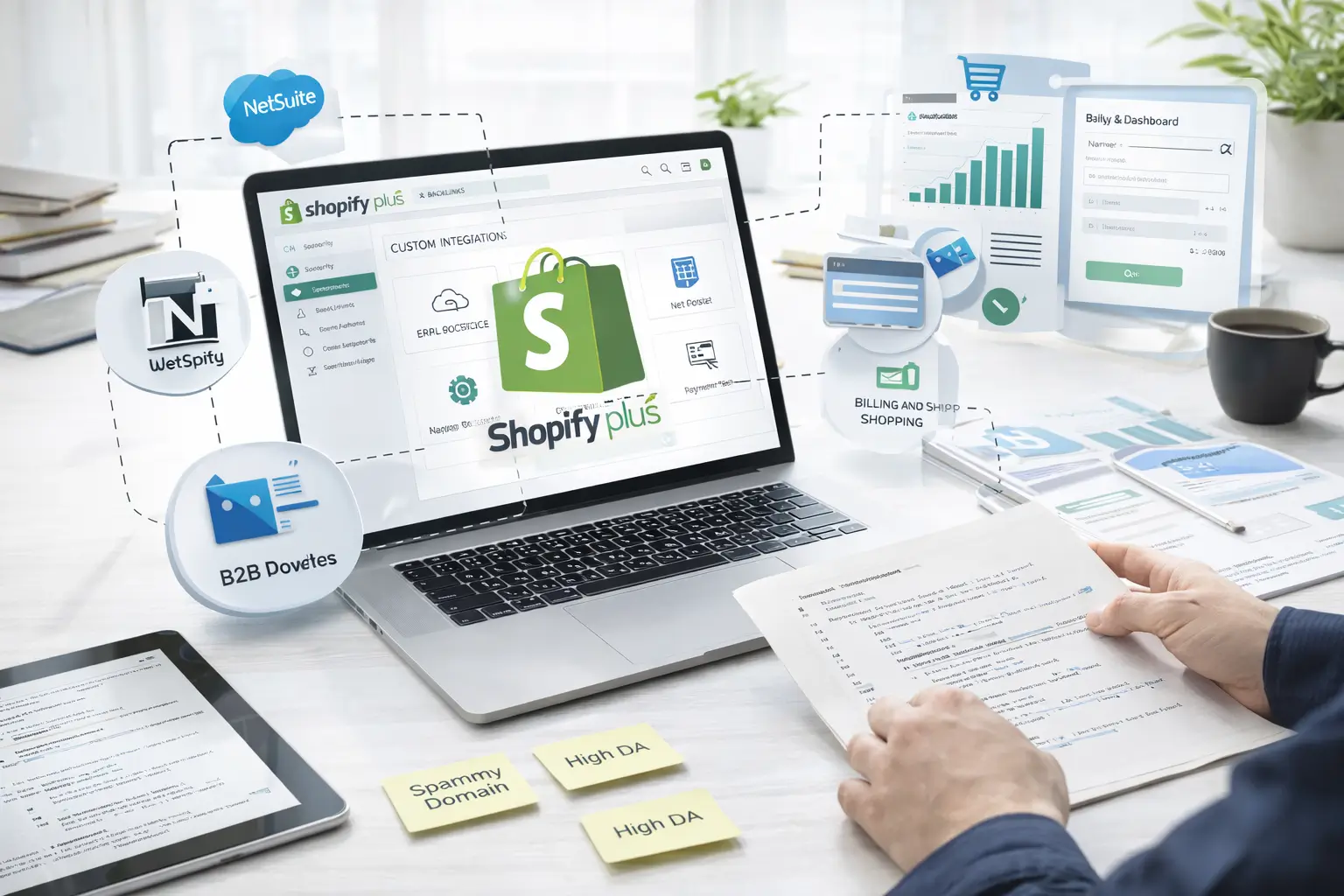


Running a large ecommerce brand today is far more complex than simply launching a store and selling products online.
Modern ecommerce businesses must manage inventory systems, marketing platforms, payment gateways, logistics tools, customer data platforms, and analytics dashboards — all while delivering a seamless shopping experience.
For high-growth brands operating on Shopify Plus, the platform offers powerful scalability and flexibility. However, to truly unlock its potential, businesses often need custom integrations tailored to their workflows and systems.
This is where custom Shopify Plus integrations and the support of an experienced Shopify Plus development agency become essential.
In this guide, we will explore:
- Why custom integrations matter for Shopify Plus stores
- The most important types of integrations enterprise brands use
- Real examples of brands using them successfully
- How to choose the right Shopify Plus development partner
- Costs and ROI of custom integrations
Let’s begin with the fundamentals.
Why Custom Integrations Are Essential for Shopify Plus
Shopify Plus is designed specifically for high-growth ecommerce brands and enterprise retailers.
It supports businesses generating anywhere from $1 million to $500+ million in annual revenue, offering powerful tools such as:
- Advanced APIs
- Automation workflows
- High-volume order processing
- Global commerce capabilities
- Custom checkout experiences
However, large ecommerce brands rarely rely on Shopify alone.
They typically operate with multiple systems, such as:
- ERP platforms
- CRM tools
- marketing automation software
- inventory management systems
- fulfillment platforms
- analytics tools
Without proper integrations, these systems operate in separate silos, creating operational inefficiencies and data inconsistencies.
Custom integrations connect these systems together so they can share data in real time and automate processes.
Key Benefits of Custom Shopify Integrations
Custom integrations help businesses:
1. Automate operations
Tasks such as inventory syncing, order routing, and financial reporting can run automatically.
2. Improve customer experience
Data-driven integrations enable personalized experiences and faster checkouts.
3. Increase operational efficiency
Teams spend less time on manual tasks and more time on strategic growth.
4. Improve revenue performance
Streamlined systems remove friction from the customer journey.
Unlike third-party apps that offer limited customization, custom integrations are designed around your business workflows.
Why Hire a Shopify Plus Development Agency
Even if your company has an internal development team, Shopify Plus integrations require specialized expertise.
A professional Shopify Plus development agency understands:
- Shopify APIs and infrastructure
- enterprise ecommerce architecture
- scalability best practices
- complex system integrations
Advantages of Working With an Agency
Deep Shopify expertise
Agencies have extensive experience with:
- Shopify Liquid
- Shopify APIs
- React and Node.js development
- headless commerce architectures
Integration experience
They understand how to connect Shopify with external platforms like:
- ERPs
- CRMs
- marketing tools
- logistics systems
Enterprise project experience
Top agencies have worked with high-volume ecommerce brands and know how to handle:
- traffic spikes
- high transaction volumes
- global operations
Full service teams
Most agencies offer:
- Shopify developers
- UX/UI designers
- solution architects
- ecommerce consultants
Ongoing support
After launch, agencies provide:
- performance monitoring
- optimization
- security updates
- technical support
Key Shopify Plus Custom Integrations for Enterprise Brands
Below are the most impactful integrations that Shopify Plus merchants implement to scale their operations.
1. ERP Integration
As ecommerce brands grow, managing inventory, orders, and financial data across systems becomes complicated.
An ERP (Enterprise Resource Planning) system centralizes core business operations.
ERP platforms commonly used with Shopify include:
- NetSuite
- Microsoft Dynamics 365
- SAP
Benefits of ERP Integration
Real-time inventory synchronization
Stock levels update automatically when orders are placed, preventing overselling.
Automated order processing
Orders can automatically flow from Shopify into accounting and fulfillment systems.
Financial reporting
ERP integrations consolidate data across stores, regions, and sales channels.
Example
Many global ecommerce brands integrate Shopify Plus with NetSuite to manage multi-warehouse inventory and financial reporting.
These integrations reduce manual work and improve operational accuracy.
2. CRM Integration
Customer experience plays a crucial role in ecommerce success.
A CRM (Customer Relationship Management) system stores customer data and enables personalized marketing.
Popular CRM platforms include:
- Salesforce
- HubSpot
- Klaviyo
Benefits of CRM Integration
Unified customer profiles
Customer data from purchases, browsing behavior, and support interactions can be centralized.
Personalized marketing automation
Businesses can trigger campaigns based on:
- browsing behavior
- abandoned carts
- repeat purchases
- loyalty milestones
Improved retention
Targeted communication improves customer lifetime value.
3. PIM Integration
Managing product data across multiple channels can become overwhelming for large ecommerce brands.
A PIM (Product Information Management) system centralizes product information and distributes it across platforms.
Popular PIM tools include:
- Akeneo
- Plytix
- Salsify
Benefits of PIM Integration
Centralized product catalog management
Product data can be updated once and automatically synced across all channels.
Faster product launches
Bulk updates allow teams to launch new collections quickly.
Better SEO
Structured product information improves search engine visibility.
Consistent brand experience
Customers see the same product data across all sales channels.
4. Payment Gateway Integration
Checkout performance directly impacts ecommerce revenue.
A slow or complicated payment process often leads to cart abandonment.
Custom payment integrations improve checkout speed and security.
Popular payment platforms include:
- Stripe
- PayPal
- Adyen
- Shop Pay
Benefits of Payment Integration
Global payment options
Customers can use region-specific payment methods.
Faster checkout
Features like one-click checkout improve conversion rates.
Security compliance
Modern payment integrations support fraud protection and PCI compliance.
5. Shipping and Fulfillment Integration
Logistics is one of the most challenging aspects of scaling ecommerce.
Shipping integrations connect Shopify with fulfillment systems and logistics providers.
Common tools include:
- ShipStation
- EasyPost
- ShipBob
Benefits
Real-time shipping rates
Customers see accurate shipping costs during checkout.
Automated warehouse routing
Orders can automatically ship from the nearest warehouse.
Improved delivery speed
Automation reduces errors and speeds up order fulfillment.
6. Marketing Automation Integration
Modern ecommerce marketing relies heavily on automation and data.
Marketing integrations allow Shopify stores to connect with platforms like:
- Mailchimp
- Omnisend
- Klaviyo
- Google Ads
Benefits
Behavior-based personalization
Marketing campaigns can trigger based on customer behavior.
Improved advertising efficiency
Integration with Google Ads allows smarter retargeting.
Better campaign insights
Brands can analyze performance across the entire customer journey.
7. Subscription and Loyalty Program Integration
Subscription models are increasingly popular across industries such as:
- skincare
- wellness
- food
- pet products
Subscription integrations help brands build predictable recurring revenue.
Popular tools include:
- Recharge
- Yotpo
- Submarine
Benefits
Recurring revenue
Subscriptions provide consistent income streams.
Customer retention
Loyalty programs encourage repeat purchases.
Personalized customer engagement
Brands can offer exclusive perks, rewards, and promotions.
8. Headless Commerce Integration
Headless commerce separates the frontend user experience from the backend ecommerce engine.
This allows developers to build highly customized storefronts while Shopify handles the backend operations.
Popular technologies include:
- Next.js
- React
- Shopify Storefront API
- Contentful
- Sanity CMS
Benefits
Faster site speed
Headless architectures improve page load times.
Design flexibility
Developers can create fully custom user experiences.
Global scalability
Headless architecture supports multi-market expansion.
9. Omnichannel and POS Integration
Customers now expect a unified experience across online and offline channels.
POS integrations connect Shopify ecommerce stores with physical retail systems.
Popular tools include:
- Shopify POS
- Square POS
Benefits
Unified inventory
Stock levels remain consistent across all sales channels.
Cross-channel returns
Customers can return online purchases in physical stores.
Unified customer data
Retail staff can access customer purchase history.
How to Choose the Right Shopify Plus Development Agency
Choosing the right development partner can significantly impact your ecommerce success.
Here are key factors to consider.
Shopify Plus Certification
Certified Shopify Plus partners demonstrate expertise with enterprise ecommerce builds.
Proven Experience
Look for agencies that have delivered measurable results for large ecommerce brands.
Transparent Processes
Reliable agencies use structured development processes with clear timelines.
Post-Launch Support
Your agency should provide ongoing optimization and technical support.
Cost of Shopify Plus Custom Integrations
Custom integrations require investment, but they can deliver significant ROI.
Typical Costs
Shopify Plus plan
$2,300+ per month depending on revenue.
Development costs
- Small integrations: $5,000 – $10,000
- Large integrations: $30,000 – $50,000+
Additional tools
Costs may include subscriptions for platforms like:
- NetSuite
- Klaviyo
- ShipStation
ROI of Shopify Plus Integrations
When implemented strategically, custom integrations often deliver measurable returns.
Common benefits include:
- Increased conversion rates
- higher operational efficiency
- improved customer retention
- reduced manual workload
Many Shopify Plus merchants report double-digit revenue growth after implementing optimized integrations.
Final Thoughts
Scaling an ecommerce business requires more than just a powerful platform.
It requires systems that work together seamlessly.
Shopify Plus provides the foundation for enterprise ecommerce, but custom integrations are what transform it into a truly scalable infrastructure.
By connecting your store with ERPs, CRMs, marketing platforms, logistics systems, and analytics tools, you can build an ecommerce ecosystem that supports long-term growth.
The right Shopify Plus development partner can help you design, implement, and optimize these integrations — turning your ecommerce store into a high-performance revenue engine.