

 Blog
Blog


Online shopping has become an integral part of everyday life. More people now prefer buying products online rather than visiting physical stores. In fact, global ecommerce revenue is expected to exceed $7 trillion by 2028, highlighting just how competitive the industry has become.
In such a crowded marketplace, simply having a website is no longer enough. Successful Shopify stores stand out because they deliver fast, intuitive, and engaging shopping experiences.
Today’s shoppers don’t stay on a website just because it looks visually appealing—they stay because it feels easy to use. Clear navigation, quick load times, and thoughtful design help build trust, and that trust ultimately leads to conversions and long-term customer loyalty.
As we move into 2026, ecommerce design trends are shifting toward speed, simplicity, personalization, and user experience. Let’s explore the key Shopify design trends and technologies shaping the future of online stores.
11 Ecommerce Website Design Shifts You Can Expect in 2026
Here are some of the most important ecommerce design trends that Shopify merchants should watch in 2026.
1. Shopify AI for Personalized Shopping Experiences
Personalization has become one of the most powerful drivers of ecommerce conversions. Shopify’s AI tools, including Sidekick and Shopify Magic, help merchants create tailored shopping experiences for each visitor.
Sidekick analyzes store data and suggests improvements, while Shopify Magic helps recommend products based on browsing behavior, past purchases, or abandoned carts.
To make the most of Shopify AI:
- Highlight personalized recommendations on product pages and homepages
- Display suggested items in the cart or checkout stage
- Use apps like Rebuy or LimeSpot to create dynamic homepage experiences
- Add product bundles and upsell sections based on customer behavior
When stores feel personalized, customers are more likely to stay longer and complete purchases.
2. Hydrogen + Remix for Faster Headless Storefronts
Website speed is critical for ecommerce success. Slow pages often lead to higher bounce rates and lost sales.
Shopify’s Hydrogen framework combined with Remix allows developers to create headless storefronts that load extremely quickly—even during traffic spikes.
Hydrogen works with Shopify’s Oxygen hosting infrastructure, delivering globally optimized performance.
Benefits include:
- Page load times under one second
- Greater design flexibility
- Improved scalability for high-traffic stores
Brands using Hydrogen often implement features like infinite product scrolling, immersive product pages, and AR or 3D product previews.
3. One-Click Checkout with Shop Pay
Checkout experience plays a major role in conversion rates. Complicated checkout flows often cause shoppers to abandon their carts.
Shopify’s Shop Pay simplifies checkout by allowing customers to complete purchases with a single click.
Effective checkout design strategies include:
- Placing Shop Pay buttons prominently on product pages
- Using sticky checkout buttons that remain visible while scrolling
- Showing shipping costs early to avoid surprises
- Offering digital wallets and local payment methods
- Displaying installment options to encourage higher-value purchases
A faster checkout experience significantly reduces friction and increases conversions.
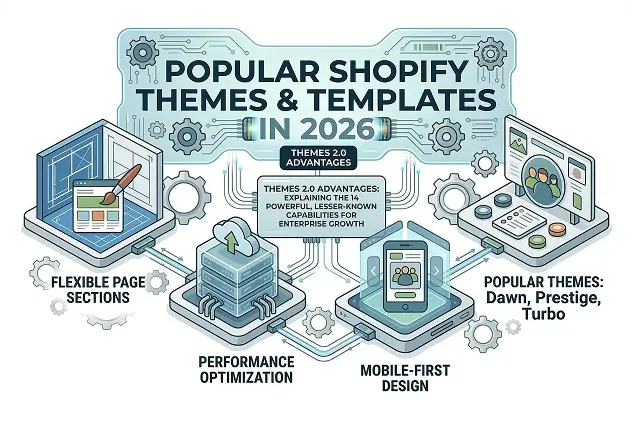
4. Shopify Themes 2.0 for Flexible Store Design
Shopify’s Online Store 2.0 architecture introduced flexible page sections and modular design.
Instead of requiring developers for every change, merchants can now customize their stores using drag-and-drop sections.
Key benefits of Themes 2.0 include:
- Drag-and-drop content blocks
- JSON templates for easier customization
- Mega menus for large catalogs
- Built-in performance optimization features
- Product recommendation sections
Popular Shopify themes in 2026 include Dawn, Prestige, and Turbo, each offering different strengths depending on store requirements.
5. Mobile-First Store Design
Mobile devices now account for the majority of ecommerce traffic.
As a result, Shopify stores must prioritize mobile-first design principles.
Many stores now use Progressive Web Apps (PWAs) to deliver app-like experiences directly through the browser.
Mobile optimization strategies include:
- Thumb-friendly buttons
- Swipeable product carousels
- Sticky navigation menus
- Push notifications for promotions and abandoned carts
- Mobile-optimized landing pages
Stores with strong mobile experiences often see improved engagement and conversion rates.
6. Visual-Focused Product Pages
Modern product pages focus heavily on visuals rather than long text descriptions.
High-quality images and videos allow customers to understand products quickly and build confidence before purchasing.
Key visual features include:
- Zoomable product galleries
- Short product videos demonstrating usage
- Full-width media layouts
- 360-degree product views
- Interactive AR previews
These visual elements replicate the experience of seeing a product in person.
7. Trust Signals and Social Proof
Trust is one of the most important factors influencing ecommerce purchasing decisions.
Customers want reassurance that they are buying from a reliable store.
Common trust-building elements include:
- Product reviews and ratings
- Verified purchase badges
- Clear shipping policies
- Delivery time estimates
- User-generated content
Many brands also showcase real customer photos or influencer mentions to build credibility.
8. Checkout Customization and Post-Purchase Experience
Checkout optimization extends beyond the payment stage. Smart Shopify stores also focus on improving the post-purchase experience.
Strategies include:
- Offering upsell suggestions after items are added to the cart
- Providing free shipping thresholds
- Displaying dynamic promotions based on cart value
- Creating branded order tracking pages
- Sending personalized thank-you messages or follow-up offers
These improvements encourage repeat purchases and strengthen customer relationships.
9. Shopify SEO and Core Web Vitals
Search engine optimization remains essential for attracting organic traffic.
Shopify automatically includes many SEO-friendly features, such as structured product data that helps search engines understand store content.
Key SEO elements include:
- Automatic sitemap generation
- Canonical tags to prevent duplicate content
- Hreflang tags for international stores
- Fast page loading performance
Core Web Vitals metrics that influence rankings include:
- Largest Contentful Paint under 1.5 seconds
- First Input Delay below 100 milliseconds
- Cumulative Layout Shift under 0.1
Optimizing these metrics helps improve both rankings and user experience.
10. Shopify Plus Enterprise Design Patterns
Enterprise-level ecommerce stores often require more advanced functionality.
Shopify Plus stores frequently use design patterns such as:
- Product configurators for customizable items
- Real-time inventory availability indicators
- Financing calculators for high-value purchases
- Tiered pricing for B2B customers
Shopify Markets also allows brands to create localized experiences with region-specific currencies, languages, and pricing strategies.
11. Conversion Rate Optimization with A/B Testing
Successful ecommerce stores continuously experiment with design improvements.
A/B testing allows merchants to compare different layouts and identify which versions generate higher conversions.
Common testing areas include:
- Homepage banners
- Product page layouts
- Checkout upsells
- Mobile navigation structures
By testing one change at a time and analyzing results, businesses can gradually improve store performance.
Final Thoughts
Ecommerce design in 2026 focuses less on flashy visual effects and more on delivering seamless user experiences.
Fast loading speeds, simple layouts, personalized product recommendations, and optimized checkout flows all play a crucial role in modern ecommerce success.
Brands that prioritize usability, performance, and continuous optimization will be better positioned to stand out in an increasingly competitive market.