

 Blog
Blog
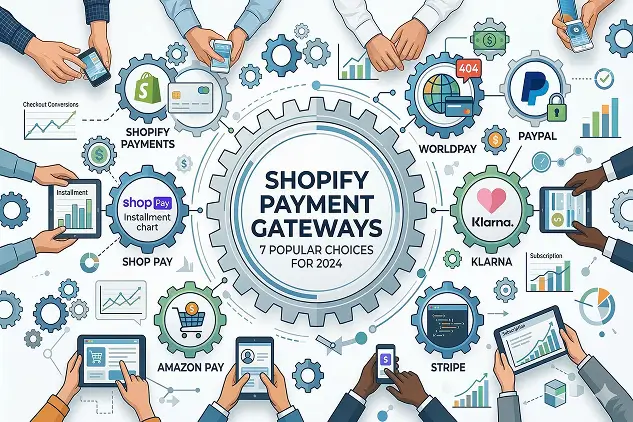


Payment gateways are one of the most critical components of any ecommerce store. They act as secure online payment processors that allow businesses to accept payments from customers through various methods such as credit cards, digital wallets, and bank transfers.
Choosing the right payment gateway for your Shopify store can directly affect your checkout experience, transaction costs, and overall business growth.
If you’re unsure which payment gateway is the right fit for your Shopify store, this guide will help you understand your options and make an informed decision.
Let’s explore the details.
Top 5 Things to Consider When Choosing a Shopify Payment Gateway
Selecting a payment gateway is not just about accepting payments. It involves several important factors that can influence your store’s performance and customer experience.
Here are the key aspects you should evaluate before choosing a gateway.
1. Regional Availability and Accessibility
Not every payment gateway is available in all countries. Before selecting a payment provider, verify that it operates both in your business location and in the regions where your customers are located.
Some gateways restrict services to specific markets, so it’s important to ensure global accessibility if you plan to sell internationally. Shopify provides a list of supported gateways by region, making it easier to find the best options available in your area.
2. Pricing Structure and Cost Factors
Payment gateway pricing varies significantly between providers. While most gateways charge transaction fees, some may also include setup costs, monthly subscriptions, or additional service charges.
Instead of focusing only on transaction fees, consider the complete pricing model. For example, a gateway with slightly higher transaction fees but no monthly charges might be more cost-effective than one with lower transaction fees and recurring monthly costs.
It’s also worth noting that Shopify itself does not charge additional fees for integrating external payment gateways.
3. Setup and Integration Time
The time required to integrate a payment gateway can vary widely. Some providers, such as PayPal, allow businesses to start accepting payments within hours or a day.
However, other gateways may require a longer verification and approval process that could take several weeks. Planning this in advance helps prevent delays when launching your store.
4. Scalability for Future Growth
If you plan to expand your business internationally, selecting a gateway that supports multiple currencies and global transactions is essential.
A scalable payment solution allows you to expand into new markets without needing to switch providers later, which can save time and prevent operational complications.
5. Competitor Research and Market Trends
Looking at what payment gateways your competitors use can provide useful insights. If a particular gateway works well for similar businesses in your industry, it might be a strong option for your store as well.
Analyzing competitor strategies can also help you identify newer, more efficient payment solutions that improve customer convenience and boost conversions.
Types of Shopify Payment Gateways
Shopify supports multiple payment gateway integrations, which generally fall into two main categories.
Hosted Payment Gateways (Redirect Gateways)
Hosted payment gateways redirect customers to an external page where they complete the payment process. Once the payment is successfully processed, the customer is redirected back to the Shopify store.
This approach is easy to implement and requires fewer security responsibilities for the store owner, making it a popular option for small and medium-sized businesses.
Self-Hosted Payment Gateways
With self-hosted gateways, customers remain on your Shopify store during the entire checkout process. The payment details are collected directly on your website, while the payment provider securely processes the transaction behind the scenes.
This method creates a smoother checkout experience and can improve customer trust and conversion rates.
7 Shopify Payment Gateways for Ecommerce Businesses
Shopify supports numerous payment providers worldwide. Below are seven widely used payment gateways that Shopify merchants commonly choose.
1. Shopify Payments
Best for: Most Shopify merchants
Shopify Payments is Shopify’s native payment solution that integrates directly with the platform. It eliminates the need for third-party gateways and simplifies the setup process.
Transaction Fees
- Basic Plan: 2.2% + 20p
- Shopify Plan: 1.7% + 25p
- Advanced Plan: 1.6% + 20p
Pros
- Seamless integration with Shopify
- No third-party transaction fees
- Built-in fraud detection tools
- Detailed transaction reporting
Cons
- Not supported in all countries
- Funds may be temporarily held if suspicious activity is detected
- Limited customization options
2. Worldpay
Best for: High-volume merchants and enterprise-level businesses
Worldpay is a global payment gateway available in over 120 countries and supports various payment methods.
Pricing Options
- Pay-as-you-go: 2.75% + 20p per transaction
- Monthly plan: £19.95/month + card transaction fees
Card fees include:
- 2.75% for credit cards
- 0.75% for debit cards
Pros
- Multi-currency support
- POS integration capabilities
- 24/7 customer support
Cons
- Complicated pricing structure
- Customer service delays may occur
- Less suitable for smaller businesses
3. PayPal
Best for: Businesses selling internationally
PayPal is one of the most widely recognized payment gateways globally and comes pre-integrated with Shopify.
Transaction Fees
2.9% + $0.30 per transaction (additional fees may apply if Shopify Payments is not used).
Pros
- Global brand recognition
- Quick and easy setup
- Mobile-friendly payment experience
Cons
- Limited customization options
- Basic customer support
- Some advanced features depend on account type
4. Klarna
Best for: Stores offering Buy Now, Pay Later (BNPL)
Klarna enables customers to split their payments into installments or delay payment, which can help increase conversion rates.
Transaction Fees
Starting at 1.9% + 20p per transaction.
Pros
- Flexible payment options
- Can improve purchase conversions
- Multi-currency support
- Easy integration
Cons
- Higher transaction costs
- Requires technical setup
- Limited support options
5. Stripe
Best for: Subscription-based and SaaS businesses
Stripe is known for its powerful developer tools and flexibility, making it ideal for stores with custom payment requirements.
Transaction Fees
- Online payments: 2.9% + $0.30
- In-person payments: 2.7% + $0.05
Pros
- Highly developer-friendly
- Supports recurring payments and subscriptions
- Accepts payments in 135+ currencies
- Handles large transaction volumes efficiently
Cons
- Integration may require technical expertise
- Additional fees for chargebacks
- Limited support for some users
6. Amazon Pay
Best for: Small to medium-sized ecommerce businesses
Amazon Pay allows customers to complete purchases using their Amazon account credentials, which can speed up the checkout process.
Transaction Fees
- Website/mobile payments: 2.9% + $0.30
- International payments: 3.9% + $0.30
- Alexa transactions: 4.0% + $0.30
Pros
- Fast checkout experience
- Trusted brand recognition
- Easy integration with Shopify
Cons
- Higher transaction fees
- Amazon retains control over some customer data
- Limited customization options
7. Shop Pay Installments
Best for: Shopify merchants offering installment payment options
Shop Pay Installments enables customers to split their purchase into four interest-free payments directly through Shopify.
Transaction Fees
Fees are deducted from merchants for each installment transaction.
Pros
- Seamless Shopify integration
- Can increase conversion rates
- Interest-free for customers
Cons
- Merchant transaction fees apply
- Available only for Shopify merchants
- Can become costly for merchants depending on usage